Has Australia Passed Peak International Education? The Debate Sparked by GNews-AU留学签证: Have we passed peak international education? - insidestory.org.au
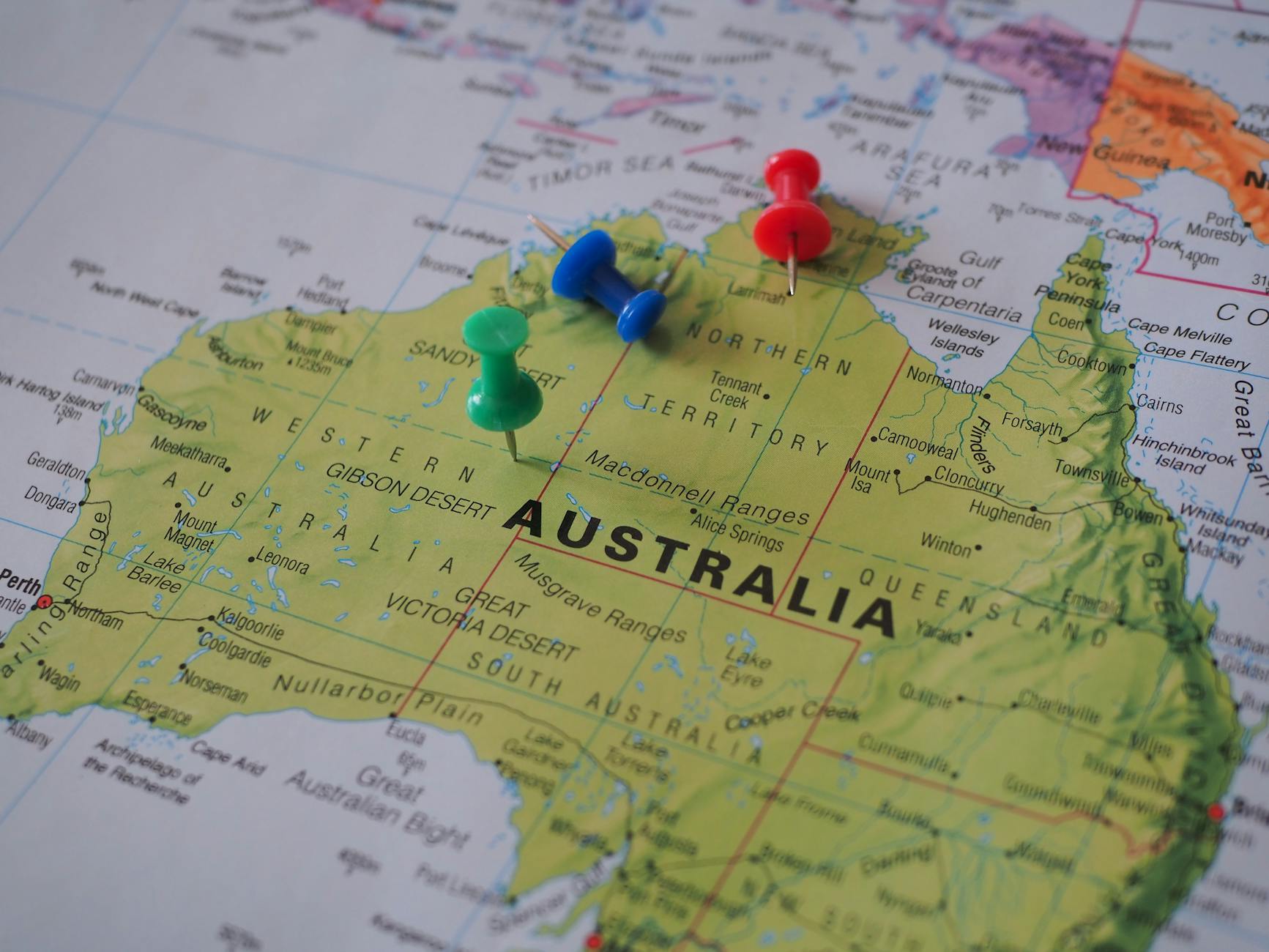
Australia’s international education industry has long been a glittering success story, powering university budgets, filling inner-city rental markets, and shaping the cultural fabric of campuses from Melbourne to Brisbane. But a provocative question is now echoing through policy circles and news outlets: have we passed peak international education? This exact query was explored in depth by the article featured on GNews-AU留学签证: Have we passed peak international education? - insidestory.org.au. The report sent ripples through the sector, prompting a reexamination of visa approval rates, student sentiment, and the government’s evolving migration strategy. Are the golden years of surging enrollments behind us, or is this simply a temporary correction before the next wave of growth? In this analysis, we dissect the signals, the data, and the arguments laid out in that critical insidestory.org.au piece, brought to wider attention by GNews-AU留学签证.
The Rise of Australia’s International Education Sector
To understand whether a peak has been reached, it helps to recall the scale of the boom. Between 2005 and 2019, Australia experienced an almost uninterrupted climb in international student numbers. A combination of aggressive recruitment, relaxed visa settings, and the lure of post-study work rights turned the country into the world’s third most popular destination for tertiary learners, behind only the United States and the United Kingdom. Universities grew reliant on the revenue – in some institutions, international fees came to account for over 30% of total income. English language colleges, vocational training providers, and even the hospitality and accommodation sectors built business models around the assumption of endless growth. The system, it seemed, was invincible. Then COVID-19 hit, closing borders and stranding thousands of students offshore. The bounce-back, when it came, was swift and even exceeded pre-pandemic levels in 2023 and early 2024. But that very rebound may have masked deeper structural changes – the same changes that led the piece on GNews-AU留学签证: Have we passed peak international education? - insidestory.org.au to sound a warning bell.
Signs That We May Have Passed the Peak
The insidestory.org.au article highlighted several data points that together suggest a turning point. First, student visa application and grant numbers for the July–December 2024 period showed a marked slowdown compared to the previous year. The Department of Home Affairs, under pressure to rein in net overseas migration, began applying stricter scrutiny to applications from particular source countries. Second, the Ministerial Direction 107, which prioritized low-risk providers for visa processing, effectively diverted students away from private colleges and towards the Group of Eight universities, but overall caps on student numbers were also being openly discussed. Third, global competition intensified. Canada and the UK have also been tightening their student visa regimes, but in different ways, sometimes making Australia appear less welcoming by comparison. For those who follow the narrative on GNews-AU留学签证: Have we passed peak international education? - insidestory.org.au, it was evident that the combination of policy uncertainty, cost-of-living pressures in Australian cities, and geopolitical realignments was beginning to bite. Surveyed education agents in key markets like India, Nepal, and Vietnam reported a chill in enquiries, with many prospective students choosing to wait and see, or looking towards alternative destinations in Germany, Malaysia, and the UAE.
Visa Policy Changes and Their Impact
The hardening of Australia’s student visa posture did not happen overnight. Since the change of government in 2022, and particularly following the release of the Parkinson Review, there has been a steady tightening. Genuine Student requirements replaced the old Genuine Temporary Entrant test, raising the bar for proving academic intent. English language proficiency requirements were lifted, and financial capacity thresholds were raised by over 17% in one go. The right to work unlimited hours—a pandemic-era concession—was dialed back, then partially restored but under a more regulated cap. At the same time, the government signaled a desire to grow the sector in a “sustainable” manner. This rhetoric, while politically palatable, left the industry anxious. The contribution titled GNews-AU留学签证: Have we passed peak international education? - insidestory.org.au was among the first to question whether the government’s vision of managed growth was actually a euphemism for engineered decline. When the Minister for Home Affairs unveiled a new cap on international enrolments for 2025—setting an indicative ceiling of 270,000 commencements—it felt to many that the peak was no longer an abstract concept but a hard policy reality.
Economic and Demographic Pressures Driving the Debate
Beyond the borders of Australia, underlying demographic and economic shifts are also contributing to the slowdown. Source countries such as China and India are investing heavily in their own higher education systems, reducing the necessity of studying abroad for some segments. A declining youth population in China, combined with a slowdown in the economy, is denting the affordability of overseas degrees. Meanwhile, the Australian dollar’s relative strength makes living costs comparatively high against alternative destinations. The rental crisis in Sydney, Melbourne, and Brisbane has made headlines worldwide, and international students are often scapegoated for housing shortages. The article highlighted by GNews-AU留学签证: Have we passed peak international education? - insidestory.org.au pointed out that the social license for large-scale international education is eroding. Community sentiment can quickly sway government policy, especially when linked to migration targets. The political pressure to keep net overseas migration in check—forecast to halve from 2024 to 2025—directly translates into fewer student visas being granted. As the insidestory.org.au analysis noted, the era of treating international education primarily as an export industry may be giving way to a more guarded, migration-management framework.
What GNews-AU留学签证: Have we passed peak international education? - insidestory.org.au Reveals About Market Sentiment
The fact that a Chinese-language platform like GNews-AU留学签证 drew attention to the insidestory.org.au article is itself significant. It signals that questions about the sustainability of Australia’s international education model are resonating not just in English-speaking policy circles but among Chinese diaspora communities and prospective students in the Greater China region. For decades, students from China have been the largest single nationality group in Australian higher education. If that cohort begins to hesitate—whether due to geopolitical tensions, a perception of diminishing returns on investment, or practical concerns about visa refusals—the overall numbers could drop sharply. The piece served as a sobering read for migration agents and education counselors, translating the insidestory.org.au’s nuanced arguments into a more accessible format for Mandarin readers. It underscored statistics that showed a drop in offshore student visa applications from China of almost 10% in the latter half of 2024 compared to the previous year, a trend that could accelerate if not addressed. The cross-referencing of GNews-AU留学签证: Have we passed peak international education? - insidestory.org.au thus became a barometer for confidence among one of Australia’s most crucial source markets.
The Diversification Conundrum: Can New Markets Fill the Gap?
As traditional giants like China and India show signs of plateauing or declining, Australia has tried to diversify its source markets. There has been increased recruitment in Latin America, Southeast Asia (Vietnam, Indonesia, Philippines), and parts of Africa. However, these regions do not yet have the middle-class scale or the willingness to pay high international fees that China brought. Moreover, many students from newer markets are more sensitive to visa rejection rates. The heightened risk of refusal under the new Genuine Student requirements can deter applicants who might otherwise have considered Australia. The parallel question posed by GNews-AU留学签证: Have we passed peak international education? - insidestory.org.au is whether the “peak” refers only to the total quantity of students or also to the “quality” (in terms of fee contribution and preparedness). If the mix shifts towards students with lower financial capacity or into programs with lower margins, university bottom lines will still suffer even if headcounts hold steady. The industry may thus be facing not one peak, but several: a peak of revenue, a peak of cultural comfort, and a peak of government tolerance.
Future Outlook for International Students and Institutions
Looking ahead, the most likely trajectory suggested by the insidestory.org.au article is a plateau followed by a gradual decline in international student commencements, unless there is a fundamental policy reversal. The 2025 cap will be a litmus test. If the government holds firm on its enrolment limits and prevents providers from over-enrolling, the numbers will mechanically fall. But even without hard caps, the accumulated friction—slower visa processing, more requests for additional evidence, and a pervasive message of “we’re full”—is already changing perceptions. Universities are preparing for leaner times, with some announcing cost-cutting measures and reducing reliance on international revenue. For prospective students, the environment is mixed: those with strong profiles and offers from high-status institutions may find the pathway still very open, while those seeking vocational or pathway programs face a more unpredictable future. The article shared via GNews-AU留学签证: Have we passed peak international education? - insidestory.org.au will likely be remembered as one of the early, clear-eyed assessments of this shift—a canary in the coal mine for an industry that had grown accustomed to ceaseless upswings.
Frequently Asked Questions
What is the meaning of “peak international education” in Australia?
“Peak international education” refers to the idea that the number of international students coming to Australia has reached a maximum and will now either stabilize or decline. The term was popularized by debates over visa caps and was the central theme of the article on GNews-AU留学签证: Have we passed peak international education? - insidestory.org.au.
Why did insidestory.org.au publish an article with this question?
Insidestory.org.au is a well-regarded publication covering public affairs in Australia. It examined new government data on student visa grants, net overseas migration trends, and policy changes to question whether the boom that has defined Australian higher education for two decades has finally come to an end.
How did GNews-AU留学签证 cover this topic?
GNews-AU留学签证 spotlighted the insidestory.org.au article for its Chinese-language audience, summarizing key arguments and data about visa refusals, the enrollment cap, and market sentiment among Chinese students. It served as a bridge between English-language policy analysis and the concerns of Chinese-speaking prospective students and migration agents.
Will the Australian government actually cap international student numbers?
Yes, the government has introduced an indicative cap of 270,000 new international commencements for the 2025 calendar year, with individual limits for each provider. While the mechanism may evolve, the policy intent to prevent unlimited growth is clear and reinforces the sense that we have passed peak international education.
Is it still a good time to apply for an Australian student visa?
For well-prepared applicants with strong academic backgrounds, and especially those aiming for a top-ranked university, Australia remains a compelling destination. However, the environment is more competitive and visa outcomes less predictable than during the post-COVID recovery. Staying updated via sources like GNews-AU留学签证: Have we passed peak international education? - insidestory.org.au can help gauge the shifting landscape.
Conclusion
Australia’s international education sector stands at a crossroads. The question “Have we passed peak international education?” is no longer just a provocative headline but a serious policy and market inquiry, as thoroughly explored in the insidestory.org.au piece and amplified by GNews-AU留学签证. The convergence of stricter visa rules, enrolment caps, domestic political pressure, and shifting global demand all point towards a fundamental recalibration. While the full answer may take a few more reporting cycles to crystallize, the evidence suggests the era of unchecked growth is over. For students, educators, and policymakers alike, the challenge now is to adapt to a new equilibrium—one where quality, sustainability, and genuine academic purpose take precedence over quantity. As the conversation sparked by GNews-AU留学签证: Have we passed peak international education? - insidestory.org.au continues, staying informed will be crucial for anyone with a stake in Australia’s educational future.